
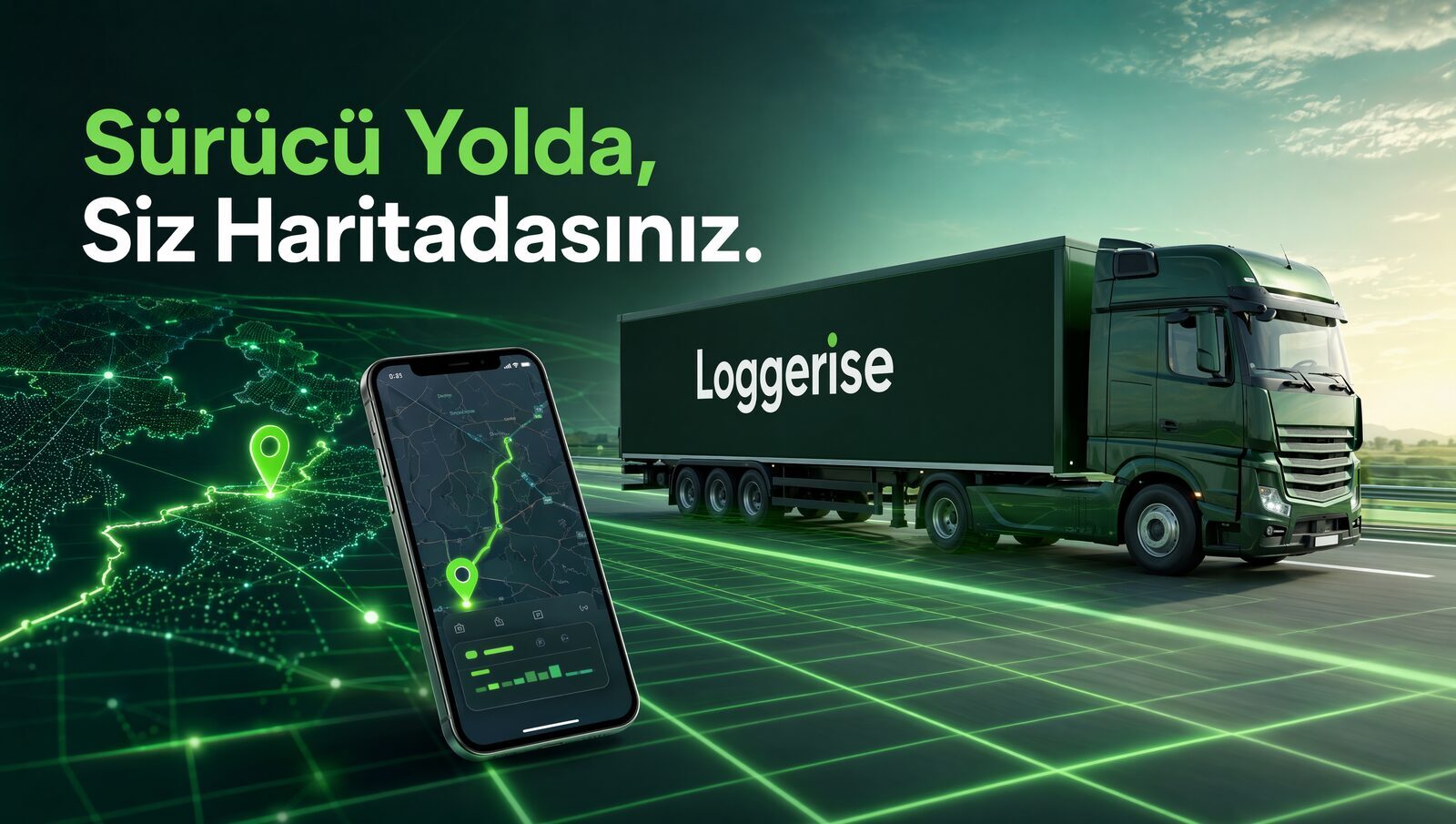
“Where are you? Is there an expense receipt? Did you send the document?” These three questions are repeated by phone dozens of times every day, and they are the most invisible time loss in operations. You call the driver on the road, but they are busy; the office is left short of information and the decision is delayed. This is exactly why live location tracking and the driver app exist: to eliminate this phone traffic. You see the vehicle’s location on the map and receive the trip, expense and document instantly from the driver’s pocket. In this article, we cover why live location tracking is necessary, what the driver app does, and how it brings the field and the office together in the same flow.
📊 Industry data: Per Tive’s 2024 study, 77% of companies consider real-time shipment visibility a “must-have,” and IoT tracking adoption jumped from 25% to 53% in a year. Tive – The State of Visibility 2024
Why is the “Where are you?” traffic a time loss?
Calling a driver repeatedly throughout the day tires both sides. The driver cannot look at the phone while at the wheel; the office cannot plan while waiting for an answer. What is more, information obtained by phone is verbal: it is not written down, leaves no record, and is misunderstood. As the number of vehicles grows, this traffic multiplies, and a large part of operations is spent chasing the “who is where?” question. Live location tracking presents the answer to this question on the map, ready, without you having to ask.
What does the driver app do?
The driver app brings operations into the driver’s pocket. The driver sees the assigned trip on their phone, instantly enters the expenses incurred during the trip, photographs and uploads the transport document, and updates the trip status. This way, the office receives this information in real time and on record, without calling the driver. The expense receipt is not lost, the document is not forgotten, and the trip status is the same for everyone.
The 4 gains of live location tracking
Seeing the vehicle’s location on the map is not just a convenience; it is a direct operational gain:
- Instant visibility: Which vehicle is where is clear at a glance; planning relies on data, not guesswork.
- Accurate delivery estimates: You give the customer a definite answer to the question “where is the cargo now and when will it arrive.”
- Fewer phone calls: The “Where are you?” calls end; both the field and the office focus on their real work.
- Instant expenses and documents: Receipts and documents are entered while on the road; the end-of-month paperwork pile and the problem of missing receipts disappear.
Bringing the field and the office together in the same flow
The real power lies in location, expenses and documents coming together in a single system. In Loggerise logistics ERP, the data coming from the driver app is recorded directly into the trip record; on the driver management side, expenses flow automatically into the settlement. The field and the office are no longer two separate worlds, but two ends of the same flow. When the driver enters something, the office sees it instantly; when the office assigns a trip, the driver finds it on their phone.
This integrity frees information from the mercy of the phone and paper; everything is on record, showing the same truth for everyone.
Battery and privacy concerns
When live location tracking is mentioned, battery consumption and privacy come to mind. A well-designed system sends location in batches and efficiently; it does not drain the battery continuously. Tracking is done within the context of working hours and the assignment; the aim is not to monitor the driver, but to make operations visible and support the team in the field.
Turning location data into operations
Live location tracking on its own is not just a map indicator; when used correctly, it becomes the foundation of operational decisions. Knowing the vehicle’s location turns into concrete value in these three steps:
- Proactive information to the customer: When the cargo sets off and approaches delivery, you call the customer; they are informed without calling you. This is not simple visibility, but a direct difference in service quality.
- Deviation alert: When there is a deviation from the planned route or schedule, you are notified early; you intervene before the problem grows.
- Retrospective analysis: The location history shows how long each route took and where time was lost; you build the next plan more realistically.
Location data reaches its true power when it is combined with trip and expense data in the same system. Then the “where is the vehicle?” question becomes part of the “how is this trip going and how can the next one be better?” question. This is what makes live location tracking valuable: not monitoring, but continuously improving operations.
Frequently Asked Questions
Does the driver app work where there is no internet?
A good app keeps data offline and syncs when the connection returns; an expense entered in a tunnel or out of coverage is not lost.
Does location tracking drain the phone’s battery a lot?
No. Location is sent in batches and efficiently; the data accumulated in the offline queue is synced in batches when the connection returns, so the battery is not drained continuously.
Is it necessary for a small fleet?
Even with a few vehicles, the “where are you?” traffic takes up time. For small teams, Loggerise ERP also offers driver and trip tracking.
Bring the field and the office together on the same screen
Stop calling the driver; see the location on the map and the expense and document in real time. Explore Loggerise ERP 👉 loggerise.com.