
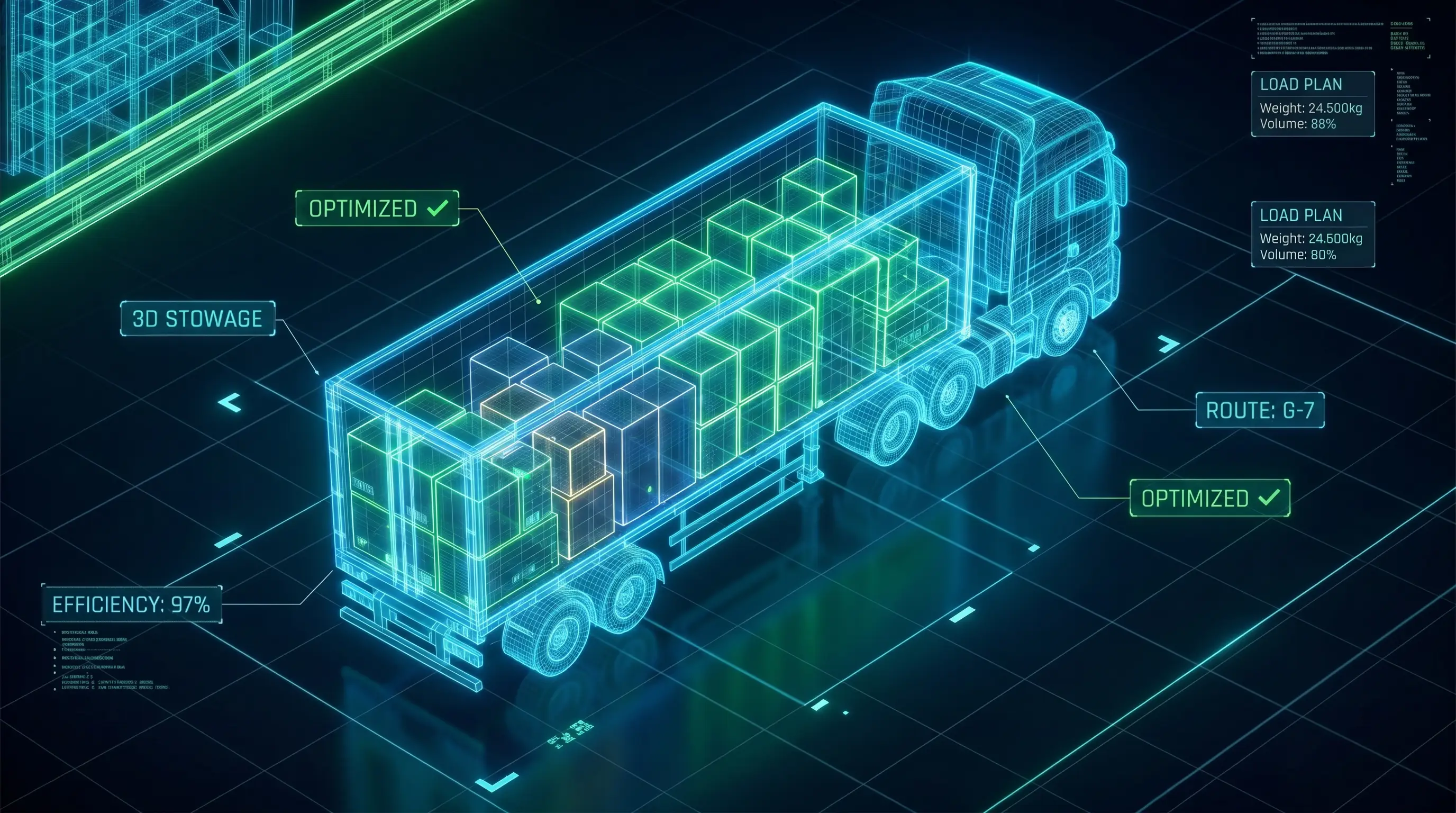
No More “Shipping Air” in Logistics: Meet 3D Interactive Loading Technology
There is a well-known, painful truth in the world of logistics: the most expensive cargo is empty space. When a truck’s doors close or a ship’s container is sealed, every cubic meter of empty space left inside is money your company throws straight into the trash. For years, warehouse managers tried to solve this problem with Excel spreadsheets, hands-on experience, or pen and paper. But as the speed of e-commerce and the variety of orders increased, the human mind’s calculation of “which box fits where” began to fall short.
This is exactly where 3D Interactive Vehicle and Container Loading software comes into play, letting you play what is essentially “Tetris with the laws of physics” right on your screen.
Perfect Loading Is More Than Just “Fitting Things In”
If filling a vehicle were only a matter of lining boxes up side by side, our job would be easy. But in the real world, logistics is subject to strict laws of physics. 3D loading planning systems calculate, within seconds, the critical details that escape the human eye:
Center of Gravity and Axle Pressure: Loading heavy pallets onto a single side of the vehicle increases the risk of accidents on the road and leads to legal penalties. The system distributes the weight evenly across the vehicle’s floor.
Fragility and Stackability: You cannot place a 50-kilogram machine part on top of a delicate product. The software recognizes the “stackability” rules of products and prevents them from being crushed.
Delivery Route (LIFO Rule): If a truck will stop at 3 different points, the goods to be delivered last must be placed at the very bottom, while the goods to be delivered first must be placed closest to the door (Last In, First Out).
The Ease of Drag-and-Drop in Your Browser
The best part of this technology is that you do not need to install a complex program. Everything happens inside your web browser, in three dimensions and fully interactively.
The system instantly pulls the order data from your warehouse (Width, Length, Height, Weight) and presents you with an optimized 3D template. However, the operations manager should never give up control. Thanks to the interactive interface, you can grab the 3D box on the screen with your mouse, drag it, rotate it, and manually revise the plan according to your own experience. With every change you make, the system updates the capacity utilization rate live.
A “Visual Guide” for Warehouse Staff
Once planning is finished in the office, the truly difficult part of the job begins in the field. With the traditional method, the warehouse worker is simply handed a long “list of items to be loaded.”
With 3D loading systems, however, when the warehouse worker opens their tablet or handheld terminal, they see a 3D simulation showing step by step how the vehicle is to be loaded. Just like a Lego assembly guide, they visually follow which pallet goes in first and which one is placed on top of it. This cuts the loading time in half while reducing the margin of human error to zero.
Conclusion: Fewer Vehicles, Greater Efficiency
3D interactive loading technology is not just a fancy visualization tool; it is a powerful financial instrument that lowers your carbon footprint, reduces the number of vehicles you use, and prevents returns of damaged products. In this period when your shipping costs are constantly rising, isn’t it time to make smart use of every square centimeter of the volume you have?
Shall we add a real-life case study that captures the reader from the very first sentence, or a striking statistic such as “X% of vehicles in the industry travel empty,” to the introduction of this blog post?