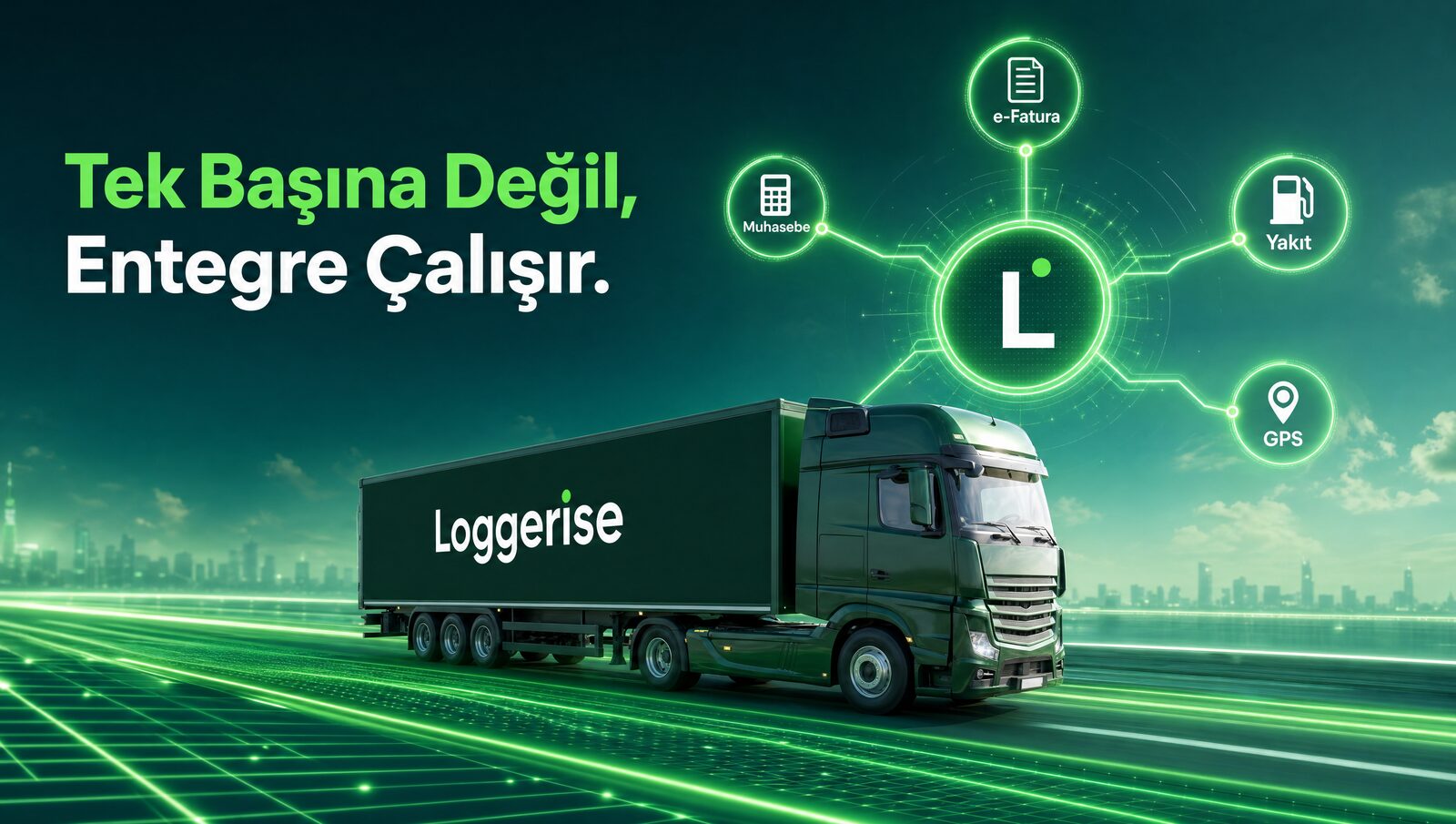
A good ERP does not work on its own; it talks to the systems you already use. Because a transport company does not live on a single piece of software: e-invoicing (e-Fatura) sits in one world, accounting in another program, and the fuel card and GPS in entirely different systems. When these systems run unaware of one another, the same data is entered by hand over and over, and each island produces its own version of the truth. This is where integration comes in — the bridge that brings these islands together into a single flow. In this article we look at why integration is critical in logistics software and which systems Loggerise talks to.
📊 Industry data: Per IMARC, Türkiye’s e-invoicing market reached $163M in 2025 and is projected to hit $619M by 2034 at a 15.5% CAGR. IMARC Group
Why is integration so important?
A logistics company’s data is not born at a single point: the trip is created in the ERP, the invoice at the e-invoice (e-Fatura) provider, accounting in a separate program, and fuel spending in the card system. Integration lets this data flow automatically between systems without being moved by hand. Without integration, each system becomes an island; the same information is entered multiple times, and an update in one place is not reflected in another. With integration, data is entered once and stays current everywhere.
The cost of systems that don’t talk to each other
When systems don’t talk, the price is quiet but constant:
- Double work: The same invoice or trip information is entered by hand into both the ERP and accounting.
- Inconsistency: A figure on one island doesn’t match the other; reconciliation takes hours.
- Delay: Because data is moved by hand, decisions always lag one step behind.
Which systems does Loggerise talk to?
Loggerise’s logistics ERP works in integration with systems widely used in the industry: Uyumsoft (e-invoice, e-Fatura), Zirve (accounting), Logo (accounting), AS24 (fuel), Seyir and Naiton (vehicle tracking). This way, invoice, accounting, fuel and location data stop being separate islands; finance and operations come together in a single flow. You don’t have to abandon your existing systems; by talking to them, Loggerise gathers the data in a single center.
What integration delivers
An integrated setup ends double data entry, reduces errors, and brings reconciliation down from hours to seconds. The invoice flows automatically from the ERP to accounting, fuel spending is reflected accurately in the trip cost, and the vehicle’s location merges with operations. As a result, instead of moving data between systems, the team focuses on the actual job — carrying the freight correctly, on time and profitably.
What to watch for when setting up integration
Integration is a powerful lever — but only when set up correctly. Paying attention to a few principles while connecting systems prevents future problems from the start:
- Not one-way but two-way: It’s not only data going out that should be planned, but also coming back when needed; for example, the invoice status should be reflected back into the ERP.
- A single source of truth: It must be clear which system holds the “master” copy of the same information; otherwise two systems produce different truths.
- Error visibility: When a transfer fails, it should not disappear silently; the system should warn you so that no data gap forms.
Loggerise builds its integration with the systems it supports on these principles: data is gathered in a single center, consistency is preserved, and transfers are monitored. This way, integration turns into a backbone that is invisible in daily use but runs constantly in the background. This is the way to bring all your tools together into a single flow without abandoning them; each system does its own job, but they all speak the same truth.
Frequently Asked Questions
Do I have to give up my current accounting program?
No. Loggerise works in integration with common accounting and e-invoice (e-Fatura) systems; it shares data with them.
Is setting up integration difficult?
For supported systems, integration comes ready; the technical setup is carried out by the team and is invisible in daily use.
Is integration necessary for a small company?
Even if you use only a few systems, double entry wastes time.
Integration is the way to bring all your systems together into a single flow without abandoning them. When invoicing, accounting, fuel and vehicle tracking talk to one another, you don’t have to enter the same data over and over, and every system shows the same truth. This ends double work, reduces errors, and speeds up reconciliation. A well-built integration is invisible in daily use; but in the background it becomes the backbone that quietly holds operations together.
In short, integration is not an add-on feature but a basic expectation of a modern logistics ERP. As your systems talk to one another, your team is concerned with growing the business rather than moving data; every record is entered once and stays the same throughout the entire chain. This gains both time and trust, bringing the whole operation together into a single consistent picture.
Let your systems meet in a single flow
Unite the islands; let invoicing, accounting, fuel and vehicle tracking work in a single flow. Explore Loggerise ERP 👉 loggerise.com.