
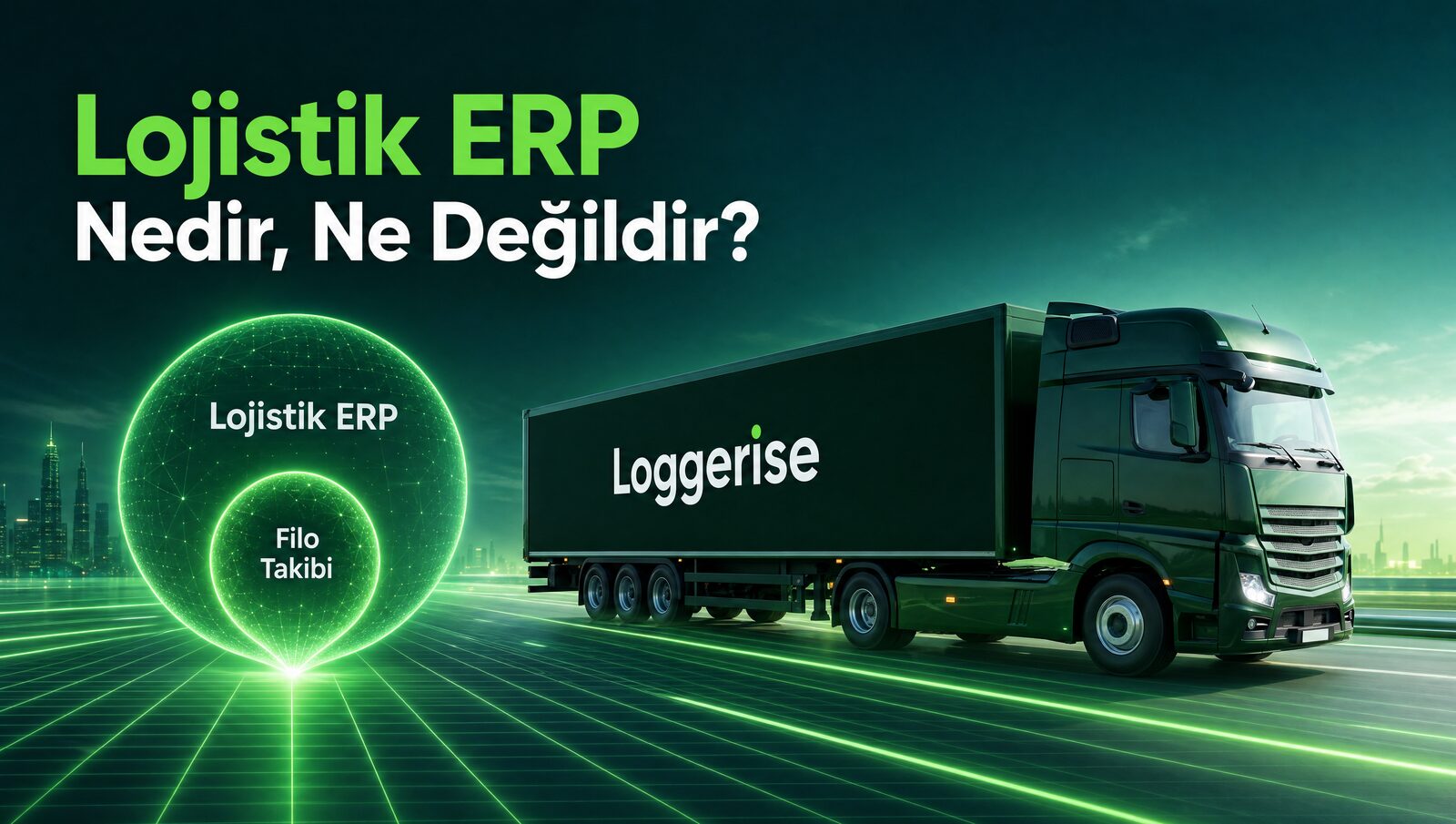
Logistics ERP is a term you hear often but one that is frequently misunderstood. The most common confusion is this: logistics ERP is not fleet tracking software. Fleet tracking monitors the vehicle; logistics ERP manages the business. In this article we clearly answer the question of what logistics ERP is, and we cover what it consists of, how it differs from fleet tracking software, and who needs it. In short: fleet tracking is one piece, logistics ERP is the whole picture.
📊 Industry data: Per McKinsey, logistics companies embedding AI into operations can cut logistics costs by 5–20% and inventory by 20–30%. McKinsey & Company, 2024
What is logistics ERP?
Logistics ERP is enterprise resource planning software that unifies the entire operation of a freight or transport company — from cargo to customs, from trip to invoice, from accounts to fleet — in a single system. What sets it apart from a general ERP is that it directly recognizes logistics-specific concepts (trip, position, CMR, customs declaration, bonded warehouse, delivery term). A single record feeds both the field and accounting; information is not fragmented, and everyone sees the same truth.
What does a logistics ERP consist of?
A mature logistics ERP typically spans the following layers:
- Operations: Cargo, position, trip, and disposition management.
- Customs and documents: Tracking of CMR, customs declarations, MRN/T1, bonded warehouse, and delivery terms.
- Fleet: Vehicles, drivers, document expiry dates, and maintenance records.
- Finance: Current accounts, multi-currency statements, invoicing, and driver settlements.
- Reporting: Profitability and performance by lane, customer, and vehicle.
Because all of these layers come together in a single dataset, a change at one stage instantly updates the others.
How it differs from fleet tracking software
Fleet tracking software monitors a vehicle’s location, speed, and fuel; it makes the vehicle in the field visible. But it knows nothing about that trip’s revenue, its customs document, or the customer’s balance. Loggerise logistics ERP, on the other hand, covers all of these: trip management, customs, finance, and fleet all run in the same system. In other words, logistics ERP encompasses fleet tracking and goes far beyond it. Fleet tracking answers the question “where is the vehicle?”; logistics ERP answers “how is the business doing, and is it making money?”
Who needs a logistics ERP?
If cargo, trips, customs, accounts, and invoicing are part of the same business — that is, if you are doing logistics in the true sense — you should have a logistics ERP as your foundation. A small fleet of a few vehicles may get by with simple tools at first; but as the operation grows, fragmented systems become bottlenecks. Every growing freight company sooner or later needs a single source of truth.
When is the right time to move to a logistics ERP?
Not every company needs a logistics ERP from day one; but every growing company reaches a threshold where it does. Reading the timing of the switch correctly protects you from both the cost of investing too early and the cost of acting too late. The following signs indicate that you have reached that threshold:
- Systems have multiplied: If fleet tracking, accounting, Excel, and WhatsApp are all used at once and none of them talk to each other, the fragmented setup has started to slow you down.
- Questions go unanswered: If you cannot give a clear answer within hours to questions like “Is this lane profitable?” or “How much does this customer owe?”, your data is scattered.
- Growth brings errors: If errors, delays, and forgotten documents increase as the number of vehicles and trips grows, your current method does not scale.
If you are experiencing several of these signs, a logistics ERP is no longer a luxury but the foundation of sustainable growth. Taken at the right time, this step saves you from a far greater burden of migrating and correcting data later on.
Frequently Asked Questions
Are logistics ERP and general ERP the same thing?
No. A general ERP is designed for manufacturing or trade; a logistics ERP directly recognizes concepts specific to trips, customs, and transport.
Does logistics ERP replace fleet tracking?
It encompasses fleet tracking data and adds trips, accounts, and invoicing on top; in other words, it replaces it while broadening its scope.
Is a logistics ERP too early for a small company?
There are solutions suited to scale. For small teams, Loggerise ERP is a lightweight starting point.
A logistics ERP is less about buying a single piece of software than about changing the way you work. When the entire operation flows on the same record from cargo to invoice, teams focus on doing business instead of shuffling data. Decisions are based on a single source of truth rather than guesswork. That is why a logistics ERP is not just a tool but a solid foundation on which a growing freight company can confidently build; the larger the scale, the more its value shows.
See the whole picture with logistics ERP
Don’t settle for just tracking the vehicle; manage your entire operation from cargo to invoice in a single system. Explore Loggerise ERP 👉 loggerise.com.